Architectural Reference Diagrams
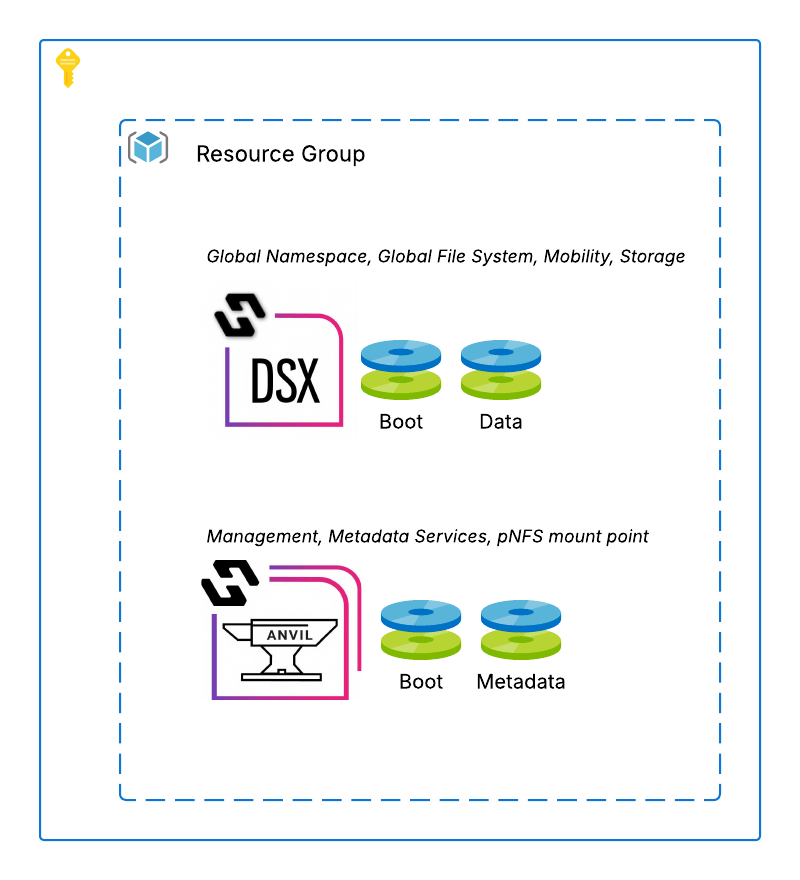
Standalone Anvil and DSX
The minimum configuration of a Hammerspace instance consists of a single Anvil and a single DSX. Each instance requires at least two disks: one for the boot partition and the second for data or metadata.
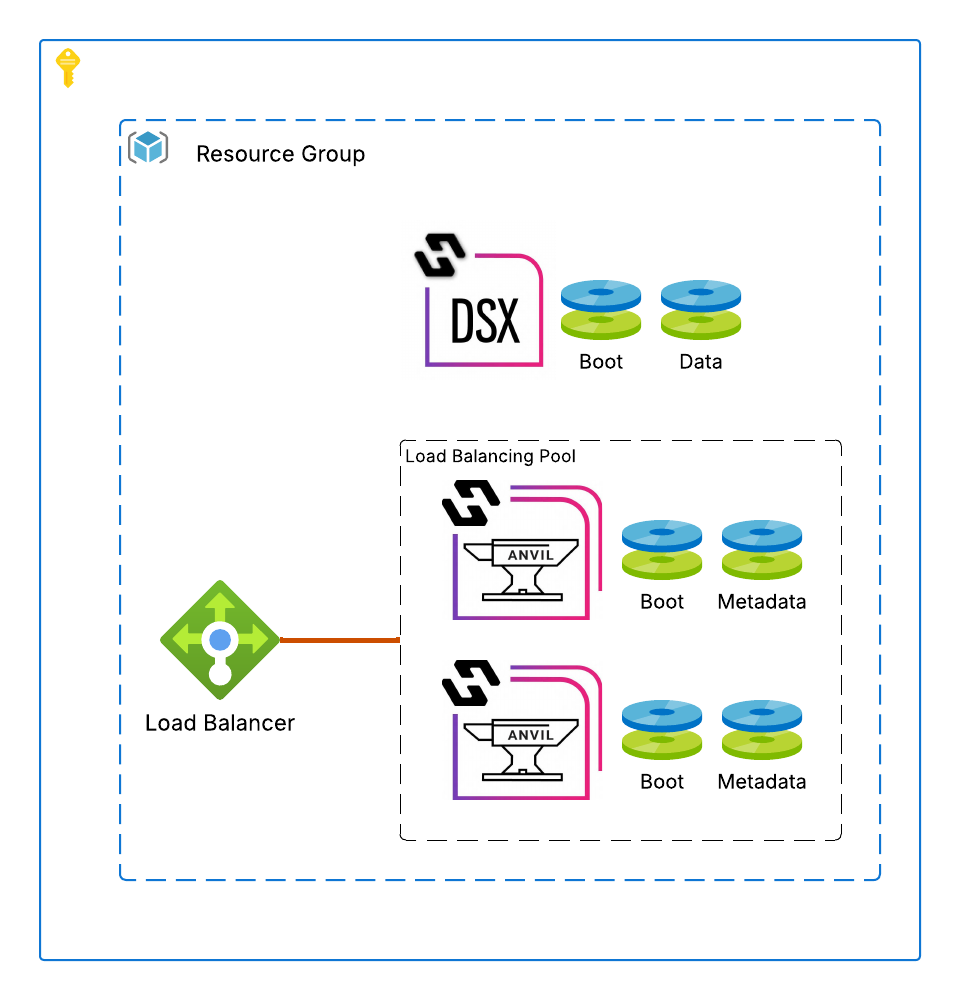
High Availability Anvil and Standalone DSX
The following diagram illustrates a single Anvil and a highly available configuration of DSX nodes. Microsoft Azure requires configuring an Azure Load Balancer to support high availability.
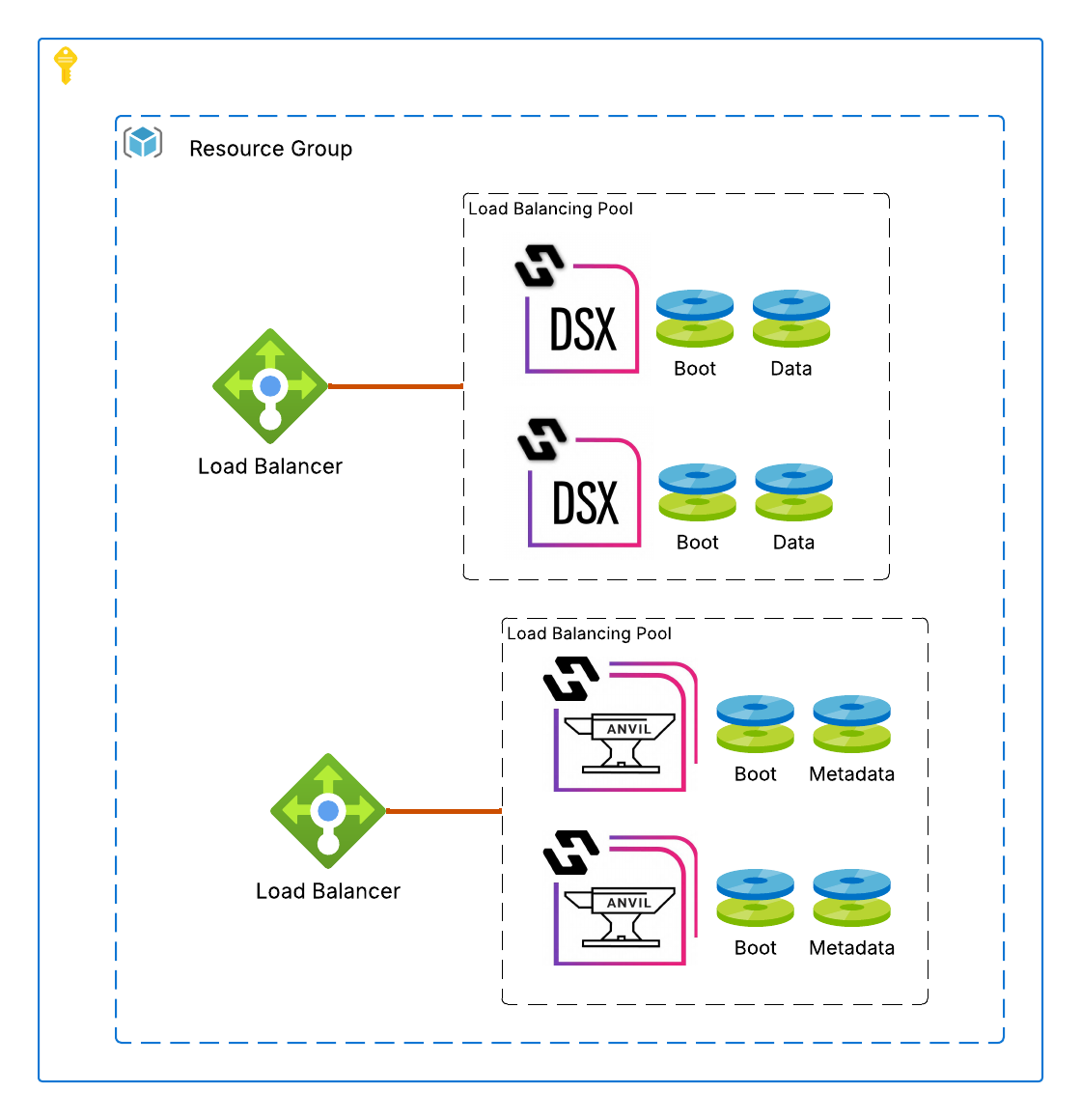
High Availability Anvil and DSX
Microsoft Azure networking does not support Gratuitous ARP and thus cannot support floating IP addresses or dynamic high-availability solutions such as VRRP. Therefore, high availability requires configuring an Azure Load Balancer, as illustrated in the following diagram.
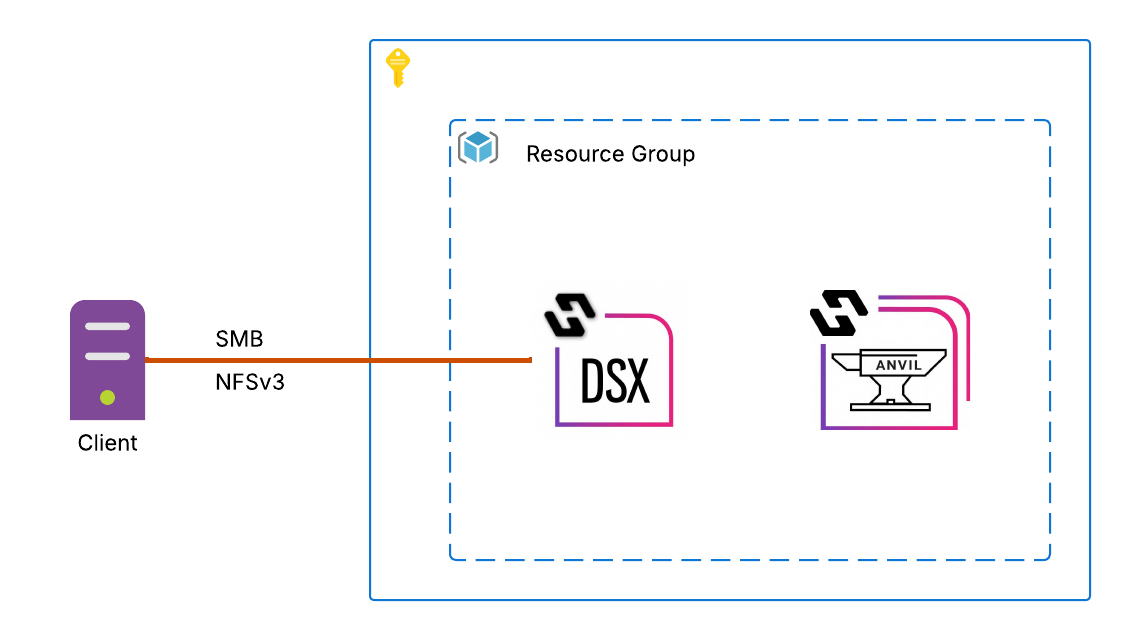
Data Path: SMB and NFSv3
The following diagram illustrates the read/write data path between an NFSv3 or SMB client and a minimal Hammerspace instance. The DSX node is the mount point and delivers the global namespace and global file system. The Anvil node controls metadata and data management, data orchestration, and all administrative functions. It also provides the Hammerspace Management GUI and Admin CLI.
Data Path: Parallel NFS (NFSv4.2)
Parallel NFS is ideal for high-performance use cases. The data and control connections are separated for greater parallelization. They are suitable for the most demanding workloads, including AI training and inference, genomic sequencing, rendering, and other HPC scenarios requiring extreme performance.
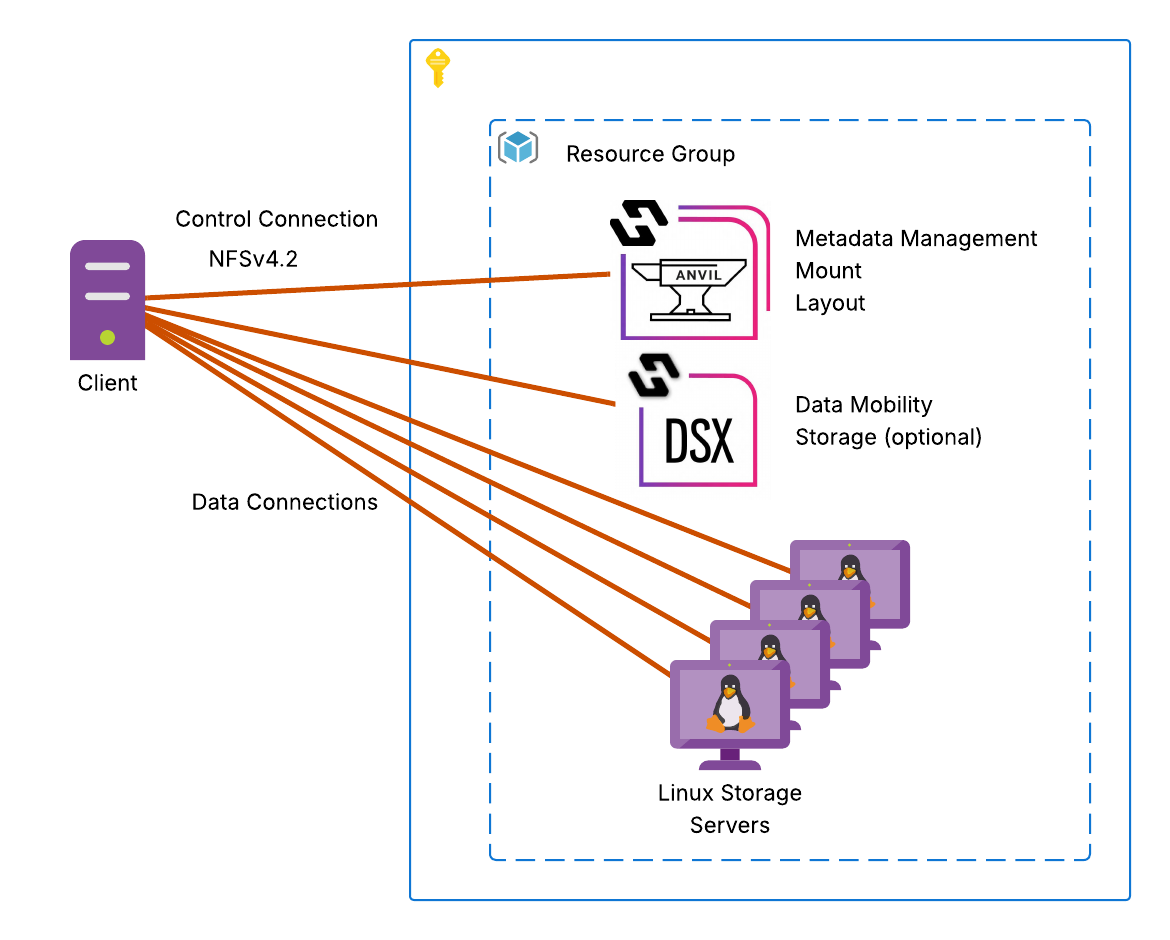
NFSv4.2 is used for the highest performance requirements, including AI/ML workloads. Connections are parallelized from the client to multiple backend Linux servers. For more information on Parallel NFS, see the following documentation: