S3
Hammerspace supports using the S3 protocol for data access. The Product provides an S3 service as part of the platform. S3 Servers and buckets within each server can then be configured to allow access to data over the S3 protocol.
The S3 protocol is available over the selected ports for an S3 server. Currently, ports 80 (http) and 443 (https) are supported.
S3 Metadata
The S3 service on each DSX node stores two kinds of metadata with the objects it serves:
- System metadata
-
Standard S3 object properties handled by the service itself, such as object size, last-modified time, entity tag (ETag), and content type.
- Product custom metadata
-
User-defined key-value pairs supplied by the S3 client as request headers with the
x-amz-meta-prefix. These are stored with the object and returned when the object is read. On a copy, whether they are carried over or replaced is controlled by thex-amz-metadata-directiveheader.
S3 Terminology
| Term | Definition |
|---|---|
Access key |
A key used to access and authenticate with the S3 service |
Anvil |
A component in the Hammerspace platform that provides a global namespace and metadata management. |
Bucket |
A container for storing data on the S3 server |
Bucket container |
A top-level location that allows clients to create buckets within it |
DSX (Data Services node) |
A Product node that provides data access and management services. The S3 service runs on DSX nodes. |
FQDN (Fully Qualified Domain Name) |
A unique identifier for the S3 server used by clients to connect. |
Local user |
A local user specific to this Hammerspace site. |
Objective |
A policy that defines how data should be placed and managed within the Product system. |
S3 (Simple Storage Service) |
An object storage service |
S3 client |
Any client that speaks the S3 API, such as a command-line tool, an SDK, or an application with S3 support. |
S3 Server |
A server that provides S3 storage services. |
S3 Limitations
The following tested limitations currently apply to the S3 service:
| S3 Service Limitations | S3 Service Limitations |
|---|---|
Max number of objects |
2^64 (18,446,744,073,709,551,616 ) 1 |
Max number of S3 servers |
2048 |
Max number of buckets |
20,000 per server |
Max number of Access Keys per S3 server |
10,000 |
Minimum object size |
0 bytes |
Max object size (with multi-part upload) |
10,000 * multi-part size 2 |
Max multi-part size (recommended) |
128 MB 3 |
Footnotes:
1 Actual max number is limited by the size of the metadata drives.
2 10,000 chunks is a hard coded limit and the max size is determined by the chunk size. Max size with 128 MB chunk size is ~1.2 TB object size.
3 The multi-part chunk size is set by the S3 client.
Multi-Tenancy
Hammerspace enables multi-tenancy with S3 in several ways. By combining these methods, you can create a secure and isolated environment for each S3 tenant.
-
S3 Server: Each tenant connects to their own S3 server. There is no ability for a tenant to discover other S3 servers.
-
Buckets: Each tenant can be assigned their own bucket or set of buckets. This ensures that data is separated, and tenants cannot access each other’s data.
-
Access Control: Access keys can be used to restrict access to buckets. Each tenant is assigned a unique access key that grants them access to their own buckets.
-
Objectives: You can use objectives to control data placement and access for each tenant. This allows you to set different policies for each tenant, such as where their data is stored and who has access to it.
-
FQDN (Fully Qualified Domain Name): Each S3 server is configured with a unique name/endpoint.
Managing S3 Servers
The system supports running many S3 servers, each with a unique configuration. The servers are hosted on all the nodes running the S3 service. This allows each S3 server to be a scale-out entity.
Transport Security
An S3 server can be connected using HTTP or HTTPS.
-
It is recommended to use HTTPS to ensure transport-level security between the S3 client and the S3 server. HTTPS connectivity is supported on port 443.
-
HTTPS connectivity is only supported with TLS (Transport Layer Security) version 1.2 and 1.3. If possible, it is recommended to use TLS 1.3 on your client. Support for 1.0 and 1.1 has been removed because those versions are no longer considered safe.
-
The encryption ciphers have also been reduced to comply with the latest security errata.
X.509 Server Certificate
By default, Hammerspace comes with a self-generated security certificate; however, this will often generate “untrusted certificate” warnings, and some S3 clients may not be able to bypass this warning.
To avoid untrusted-certificate warnings, install a certificate in Hammerspace using the cluster-config command.
For more information on managing server certificates, refer to the Server Certificate section.
Basic Workflow for Configuring S3
The following major tasks describe a generic workflow for configuring S3 data access.
-
Enable the S3 Service.
-
Set up FQDN in DNS.
-
Create an S3 server.
-
Manage users and access to the S3 server.
-
Set up buckets.
-
Configure the S3 client to connect to the S3 server.
Preparing for S3 Configuration
Several key data points should be determined before configuring the S3 server.
-
Each S3 server is typically addressed using an endpoint name, which is represented by a DNS record. The endpoint name determines which S3 server the traffic is routed to. We recommend that this be configured before setting up the S3 server. Note that you can only access the default S3 server if using an IP address as the endpoint.
-
S3 buckets have two methods for data access: traditional path-based or virtual-host style. It is important to know that the virtual-host style requires additional DNS entries for each bucket accessed using virtual-host addressing.
-
Determine how buckets should be managed. The Product supports managing buckets with the administrative API, as well as creating and deleting buckets via the S3 API, or a combination of both.
-
If sharing existing data (an entire share or a subfolder within a share), determine the type of access that should be provided via S3. Permissions are standard across all protocols; however, access can be limited via S3 using ACLs.
Creating an S3 Server Using the GUI
Creating an S3 server is required as part of the workflow to access data over the S3 protocol. The workflow to create an S3 Server can be used to create the S3 Server, configure buckets/bucket containers, and add the access keys.
| The S3 server can be created using the Admin CLI, Management GUI, or REST API. In Revision 1 of this documentation, only the GUI method is described. Future revisions will include procedures for creating an S3 server using the CLI or the REST API. |
In the GUI, an S3 server can be created as part of the add-bucket workflow or the create-S3-server workflow. In either workflow, the S3 server options are the same.
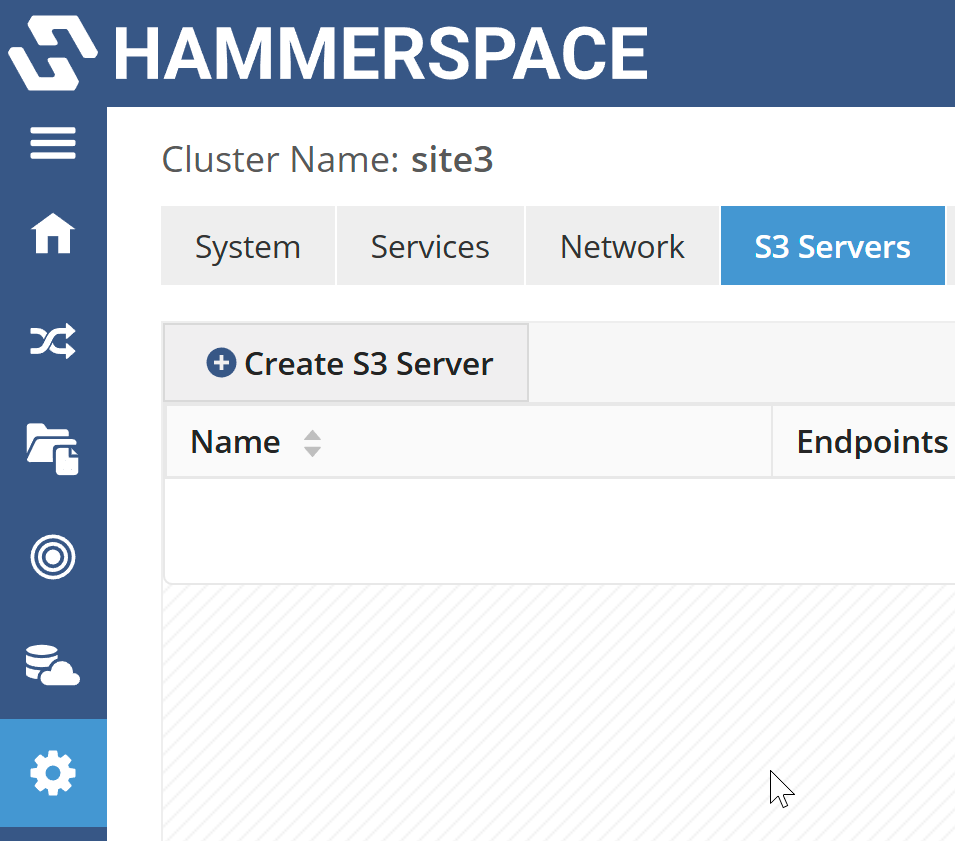
Navigate to tab and click Create S3 Server.
-
On the S3 Server page of the wizard, add the required information.
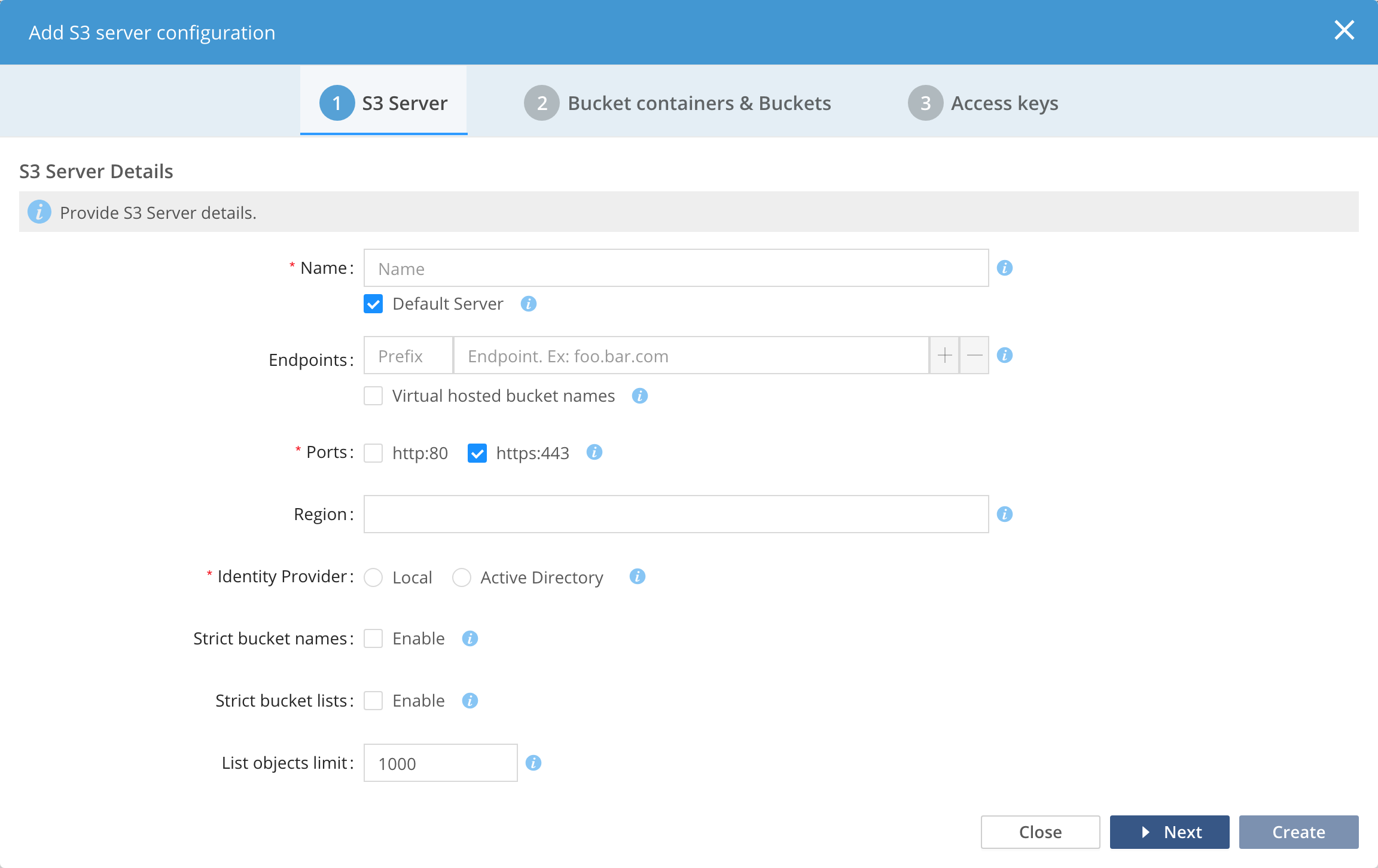 Figure 2. Add server information
Where:
-
Name: The management name for the S3 server.
-
Endpoints: One or more DNS endpoints with prefixes. The endpoint identifies the S3 server and provides a way for clients to connect to different S3 servers. The endpoint must be unique to this S3 server. If no endpoint is configured, the default server option must be checked.
-
Prefix: Allows virtual-hosted style bucket access. The prefix must be the same for all endpoints.
-
Virtual Hosted Bucket Names: Check to enable virtual hosted style bucket access. A prefix is required in the endpoint address if this option is checked. DNS needs to be configured for all buckets that will be addressed using virtual-hosted style bucket names.
Example: https://bucket-name.<Prefix>.foo.bar.com/ -
Ports: Select the HTTP and/or HTTPS protocol. Both can be selected simultaneously.
-
Region: Default region for buckets created in this server. This field is optional, but can be used when applications are expecting a region. us-east is the default region, which is not configured.
-
Identity Provider: Every S3 user requires a file system identity, it can be configured to be Local to the server or from Active Directory. If the bucket contents is shared with NFS/SMB protocols, ensure the same identity provider is used.
-
Strict Bucket Names: Enables strict bucket naming to conform with Amazon S3 bucket naming rules.
-
Strict Bucket Lists: When enabled, only return the buckets owned by the user.
-
List Objects Limit: Sets the default number of keys returned by the ListObjects or ListObjectsV2 API call. Note that the ListObjectsV2 API is allowed to override this value.
-
S3 access permissions: Default access permissions for objects created in buckets. Note that this setting can be overridden with the bucket access permissions setting.
-
-
Click Create to create and configure the S3 server.
The server is not usable until a bucket or bucket container is configured and access keys are set up. This can be done by continuing the wizard or by navigating to the Buckets or Bucket Container tab in the GUI.
Deleting an S3 Server
Deleting an S3 server does not delete any actual data; it only deletes the server configuration. The server configuration includes the bucket, bucket container, and access key information.
| Care must be taken when deleting an S3 server. The delete process allows for the deletion of an S3 Server with configured buckets; there is no method to undo a deletion. |
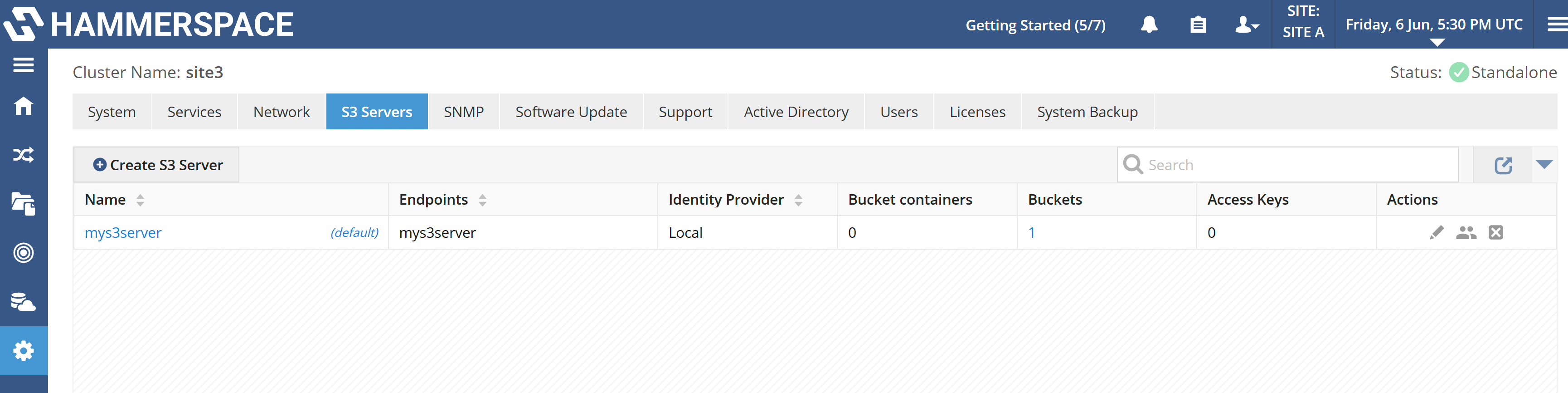
In the Management GUI, navigate to .
-
Click the Delete (X) icon to delete the S3 server.
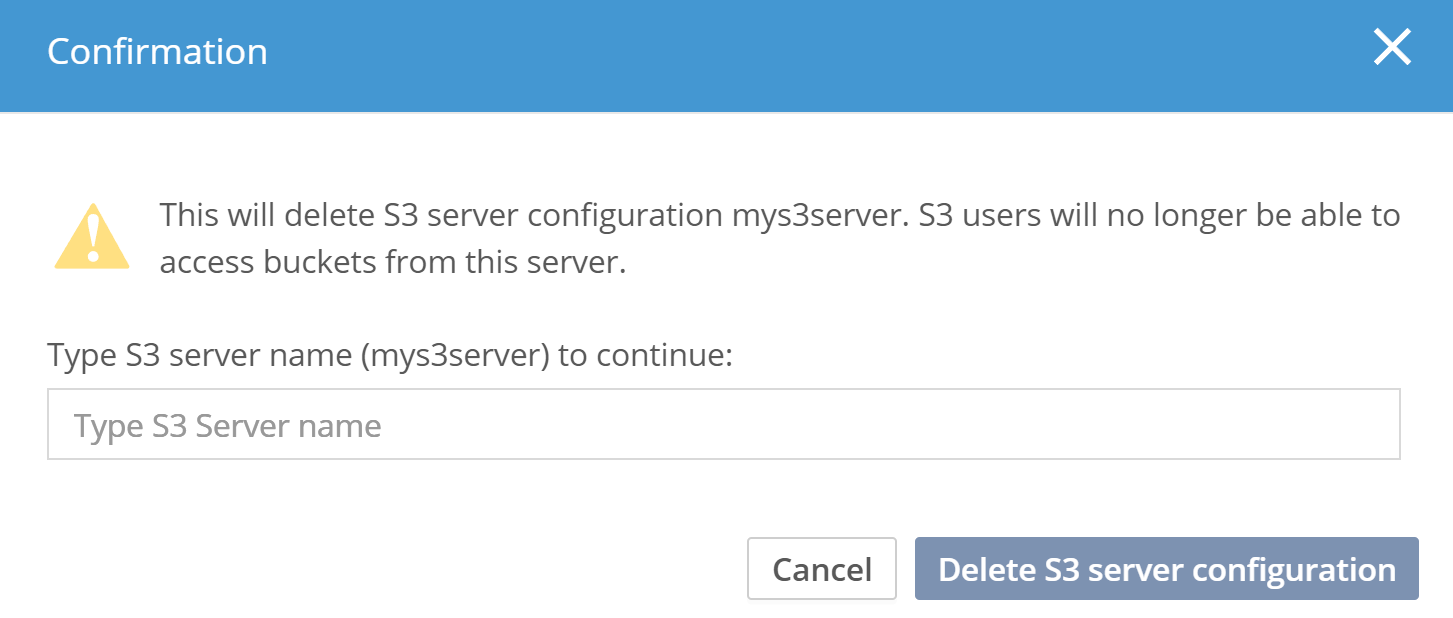
This will delete the entire configuration of this S3 server. However, it will NOT delete any of the data. It is required to manually type the name of the S3 server to minimize accidental operations.
Confirm the deletion by clicking Delete S3 server configuration.
Managing S3 Buckets
Deleting an S3 Bucket
S3 buckets can be deleted using the S3 API, as well as from the Management API.
When deleting buckets using the S3 API, the access credentials must have access to delete the bucket, and only empty buckets can be deleted using the S3 API.
Using the Management GUI
Buckets can be deleted using the product GUI. As part of the workflow, the data can also be deleted from the bucket. This requires the same level of role access as when deleting a share.
Use the following procedure to delete a bucket from an S3 Server:
-
Navigate to the bucket listing. This can be done via the S3 server tab or the Buckets tab under the Data section.
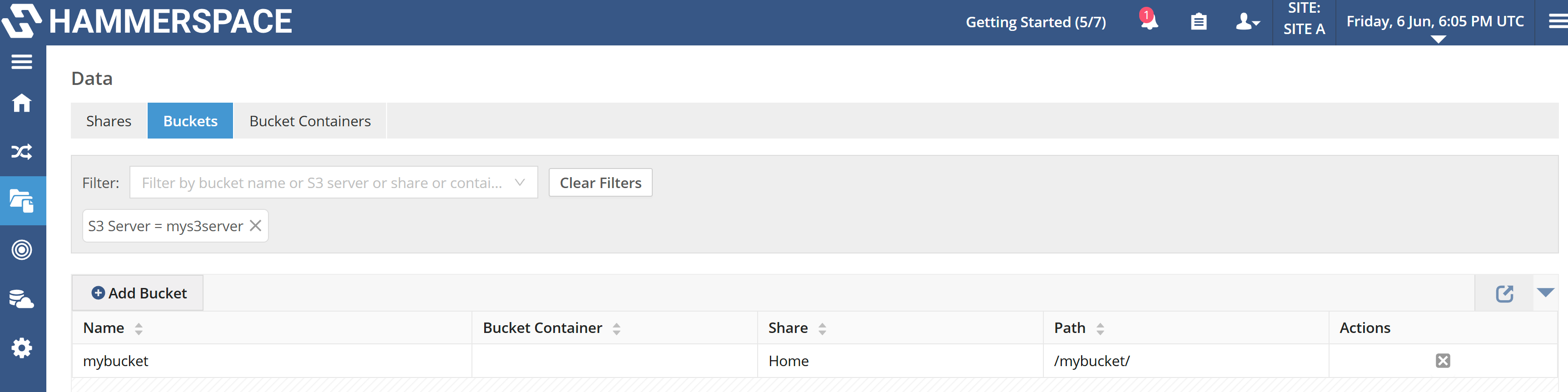 Figure 5. Buckets list
 -
Click the Delete icon (X) under the Actions column. This opens the confirmation dialog.
-
Decide whether to delete the data as well as the configuration.
The dialog offers a Delete data from bucket option:
-
Leave it cleared to remove only the bucket configuration. The objects remain in the share, reachable over NFS and SMB, and over S3 if the bucket is reconfigured.
-
Select it to delete the bucket’s data along with its configuration. This requires the same level of role access as deleting a share, and there is no method to undo it.
-
-
Click Delete bucket configuration to complete the deletion.
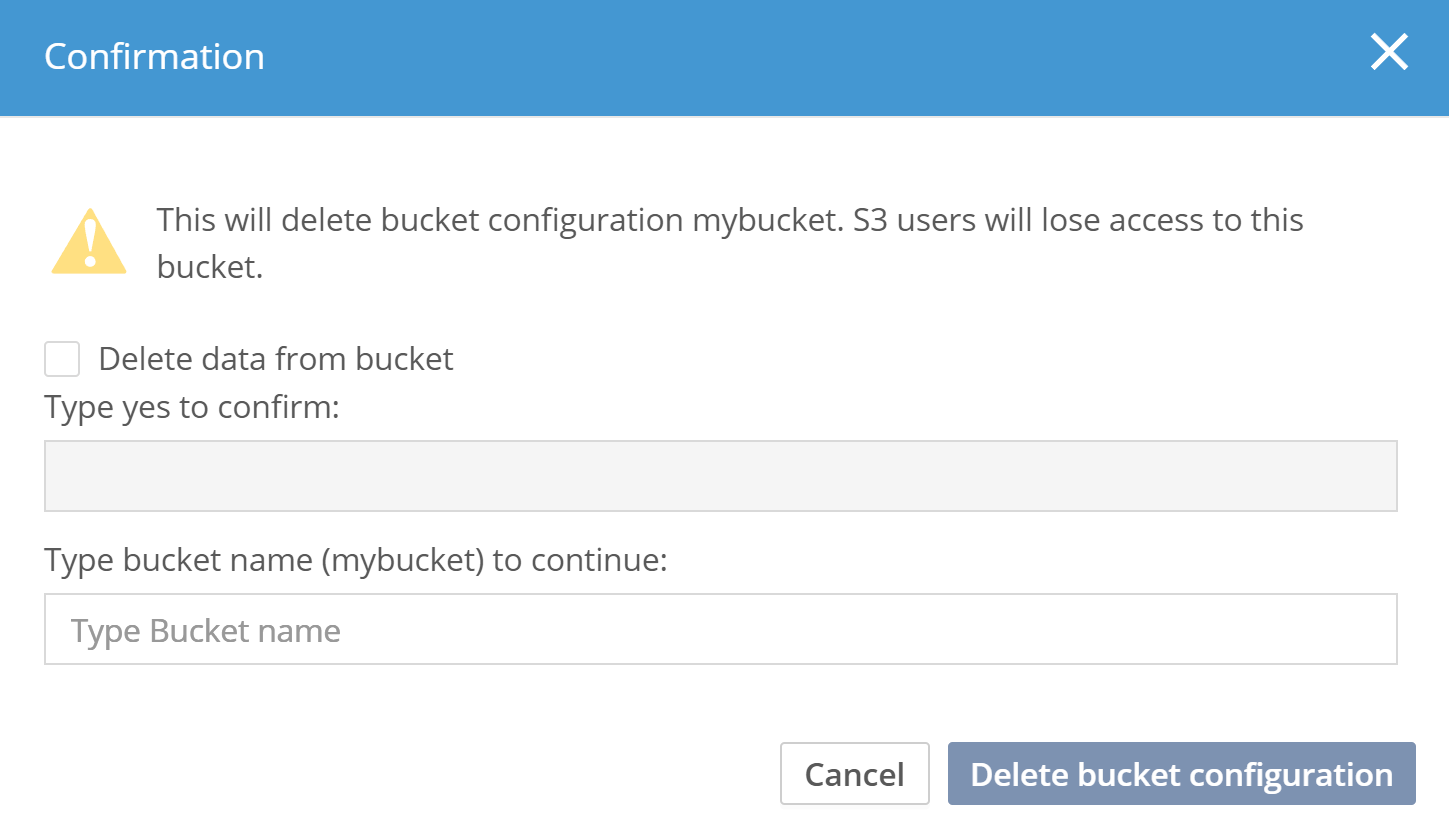 Figure 6. S3 bucket-delete confirmation
Missing Bucket and Bucket Container Events
Buckets and bucket containers created through Hammerspace (the management GUI or the management API) are recorded in the system configuration; those created directly through the S3 API are not. Because each is backed by a directory in a share, it can also be reached over NFS or SMB. If the directory for a Hammerspace-created bucket or bucket container is removed over a non-S3 protocol, it is gone on disk but Hammerspace still lists it. The next time an S3 client uses it, the S3 service detects the missing directory and reports an event: status NoSuchBucket (a missing bucket) or NoSuchContainer (a missing bucket container), recorded with the S3 source name and listed by event-list and in the GUI.
| To avoid notification floods, the S3 service reports this only once per S3 service restart. After the first event, further missing buckets are not reported until the S3 service restarts. The event therefore means that at least one item is missing; it is not a complete inventory. |
This behavior is not specific to replication. In a global filesystem where the same buckets are configured at each site, each site detects and reports the condition independently. With a shared object-storage volume, the site that currently hosts the volume reports it.
When you see one of these events:
-
Note the bucket name or path identified in the event.
-
Determine whether the directory was removed intentionally. For a bucket or bucket container created through the GUI or the management API, removing the directory over NFS or SMB does not remove it from the Hammerspace configuration, so the two are now out of sync.
-
Resolve the mismatch by recreating the bucket or bucket container, or by deleting its Hammerspace configuration.
-
Re-check your full bucket configuration, because a single event does not necessarily correspond to a single missing item.
Managing S3 Users
Access to S3 requires credentials, which are provided using the Access and Secret key approach. Each S3 server manages its own set of credentials, and one set of credentials cannot be used with another S3 server unless the same credentials are added to that server.
The credentials map to an S3 user. The S3 user maps to an identity in the file system. This identity can be either a local user or originate from a centralized source, such as Active Directory. When creating the S3 server, the identity source is configured, and mixing multiple sources is not supported.
Adding an Access Key to an S3 Server
Use the following procedure to add an access key to an S3 server:
-
In the Management GUI, navigate to tab.
-
For the server you want to manage, click either the Edit (pencil) icon and then the Access keys tab, or the View Users icon.
-
Click Add Access Key.
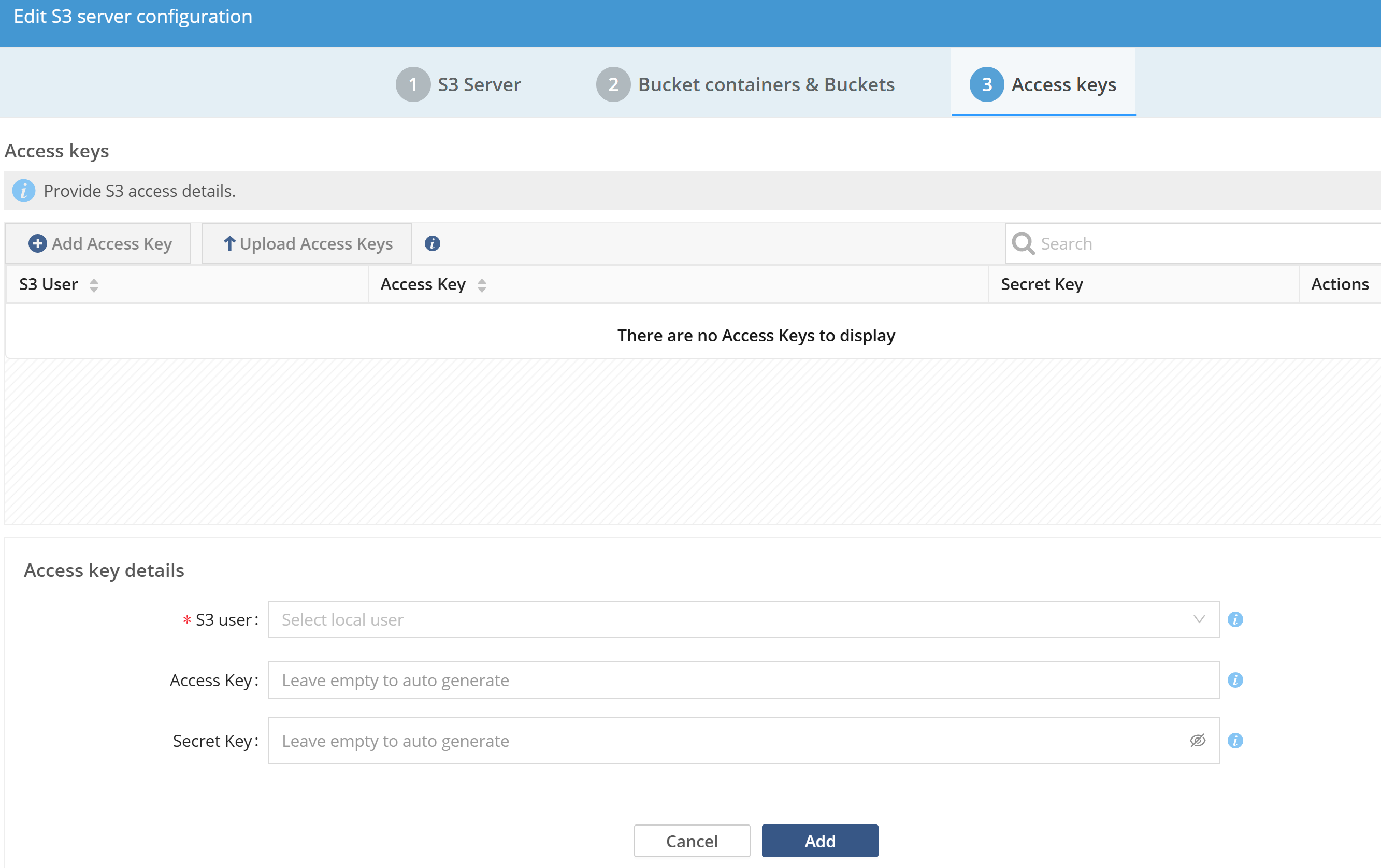 Figure 7. Example of adding an access key for a local user
Additional details:
-
The S3 user field must match a locally created user if using local users. If none exists, navigate to and add a local user for data access.
-
If using Active Directory, the username will be validated, and an error will be shown if it cannot be found.
-
The Access and Secret key will be autogenerated if left empty. Note that the access key needs to be unique within an S3 server.
-
-
Press Add to update the configuration. The secret key will not be visible again after this step and must either be downloaded or manually copied to a secure location.
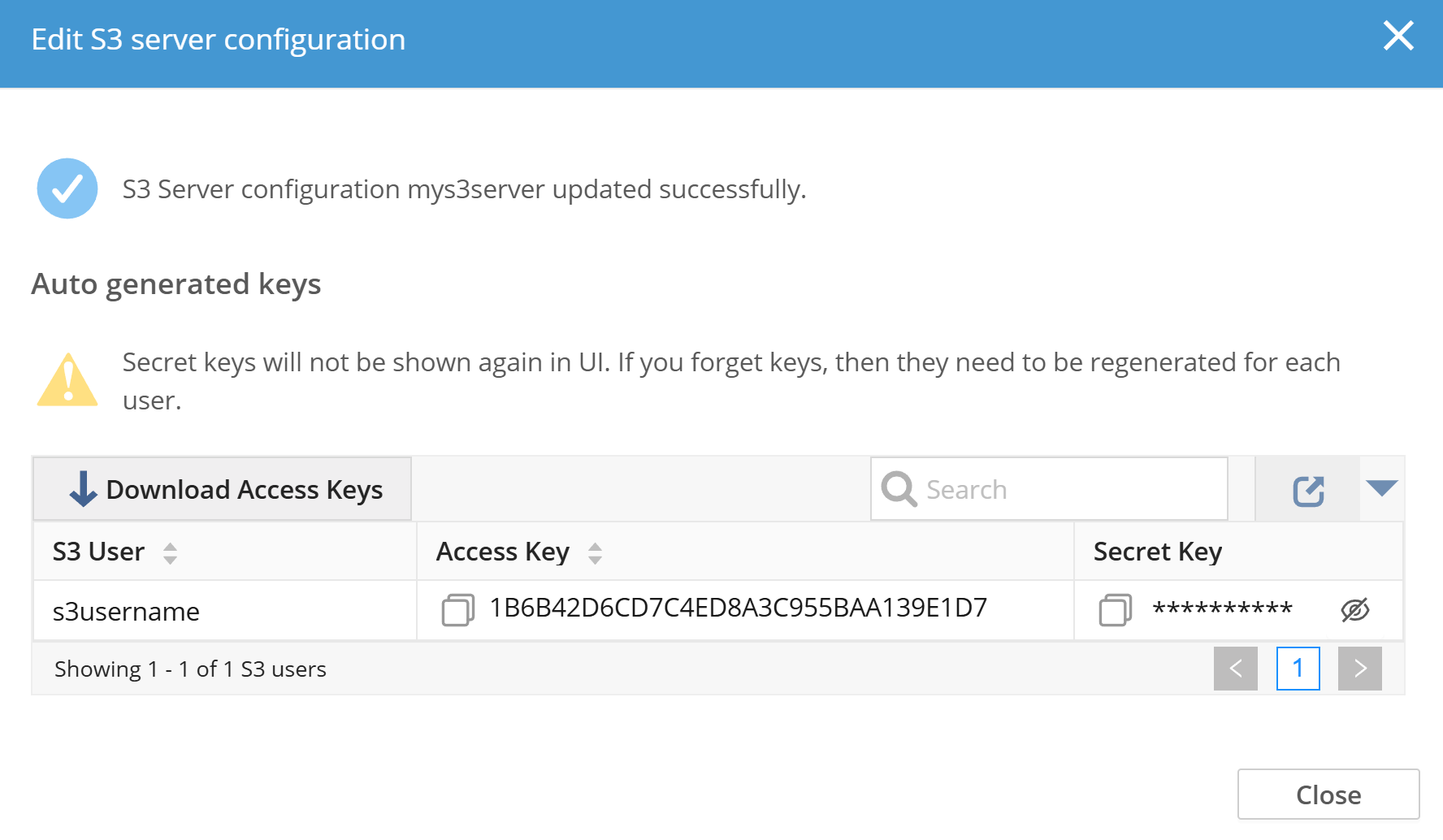 Figure 8. Adding an access key to an S3 server
Adding Multiple Local Users at the Same Time
The product also supports uploading a .csv file with columns for username, access, and secret key. All three are required to successfully import a user. A sample CSV can be downloaded by clicking the information (i) icon.
s3user,accessKey,secretKey
testUser,testUserAccessKey,testUserSecretKey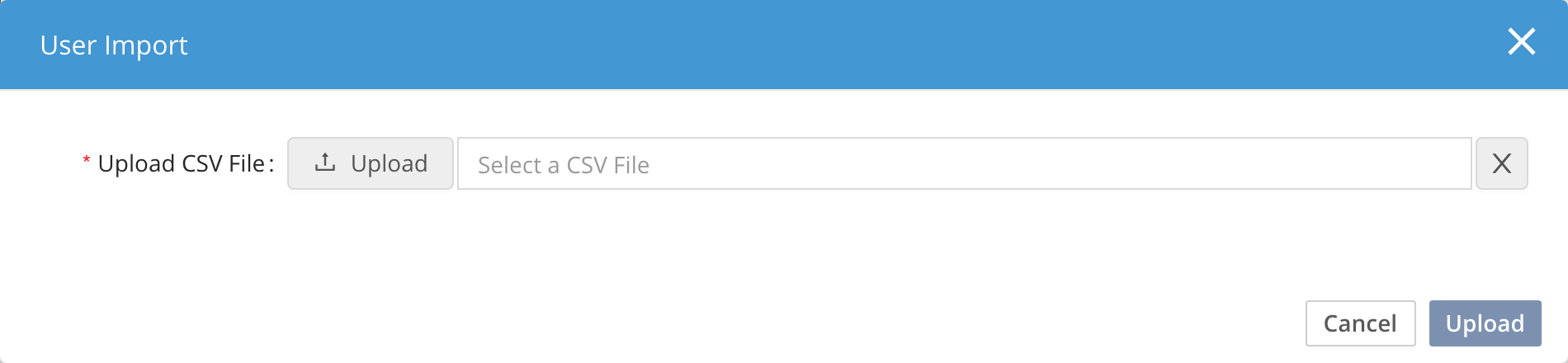
Removing Access to an S3 Server
To remove access to an S3 server, a user can be either deleted or disabled (in Active Directory, for example), and they will no longer be able to authenticate and connect.
If the user is removed from the S3 server, it will only impact access to that S3 server, not any other S3 servers. Removing a user will not remove any objects/data in the file system.
S3 API Overview
Hammerspace supports the S3 API operations listed below. Addressing and authentication support both path-style and virtual-hosted bucket addressing, and presigned URLs using AWS Signature Version 4 query parameters.
| Operation | Notes |
|---|---|
CreateBucket |
|
DeleteBucket |
|
HeadBucket |
|
ListBuckets |
|
GetBucketLocation |
|
GetBucketAcl / PutBucketAcl |
|
GetBucketCors / PutBucketCors / DeleteBucketCors |
|
GetBucketTagging / PutBucketTagging / DeleteBucketTagging |
Added in 5.3. |
GetBucketOwnershipControls / PutBucketOwnershipControls / DeleteBucketOwnershipControls |
|
GetBucketPolicyStatus |
|
GetBucketVersioning |
|
PutBucketVersioning |
Cannot be used to disable snapshots or versioning. |
GetBucketIntelligentTieringConfiguration |
Always returns |
ListBucketIntelligentTieringConfiguration |
Always returns |
DeleteBucketIntelligentTieringConfiguration |
Always returns |
GetBucketPolicy / DeleteBucketPolicy |
|
GetPublicAccessBlock / PutPublicAccessBlock / DeletePublicAccessBlock |
|
GetBucketLogging |
|
GetBucketAccelerateConfiguration |
|
GetBucketLifecycleConfiguration / PutBucketLifecycleConfiguration / DeleteBucketLifecycle |
Used in conjunction with Hammerspace objectives. |
| Operation | Notes |
|---|---|
GetObject / PutObject / CopyObject |
|
PostObject |
Added in 5.3. |
HeadObject |
|
DeleteObject / DeleteObjects |
|
ListObjects / ListObjectsV2 |
|
ListObjectVersions |
|
GetObjectAcl / PutObjectAcl |
|
GetObjectTagging / PutObjectTagging / DeleteObjectTagging |
|
GetObjectLockConfiguration / PutObjectLockConfiguration |
|
GetObjectLegalHold / PutObjectLegalHold |
| Operation | Notes |
|---|---|
CreateMultipartUpload |
|
UploadPart / UploadPartCopy |
|
ListMultipartUploads / ListParts |
|
CompleteMultipartUpload / AbortMultipartUpload |
| Operations that do not appear in these tables are not supported. |